

Designs for Langhorne Creek Discovery Trail Unveiled
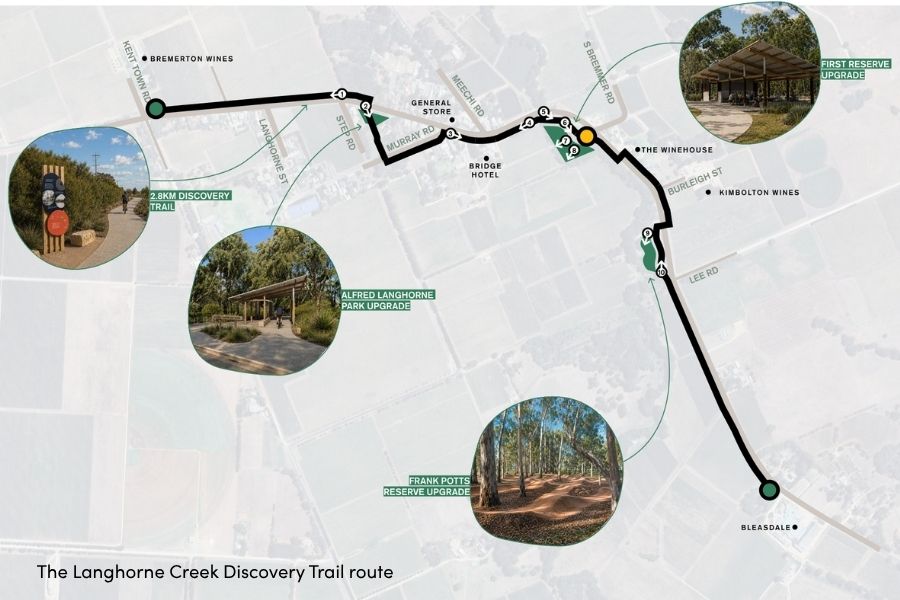
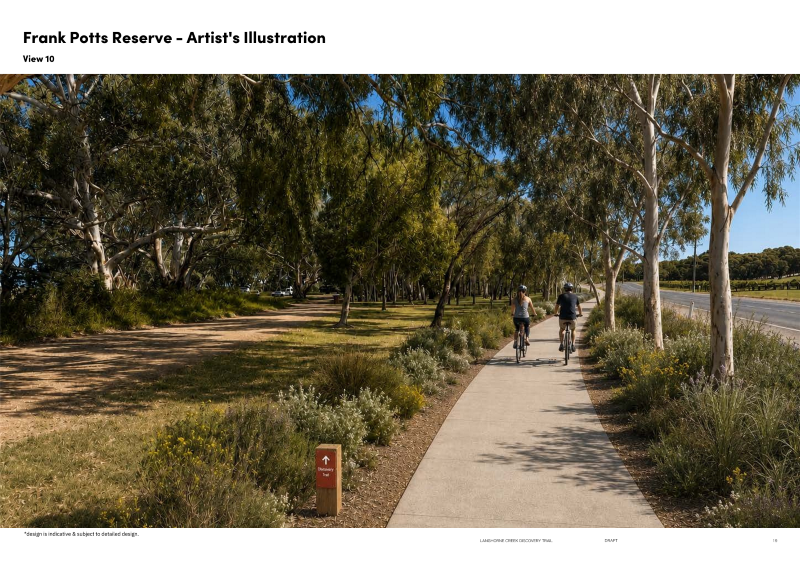
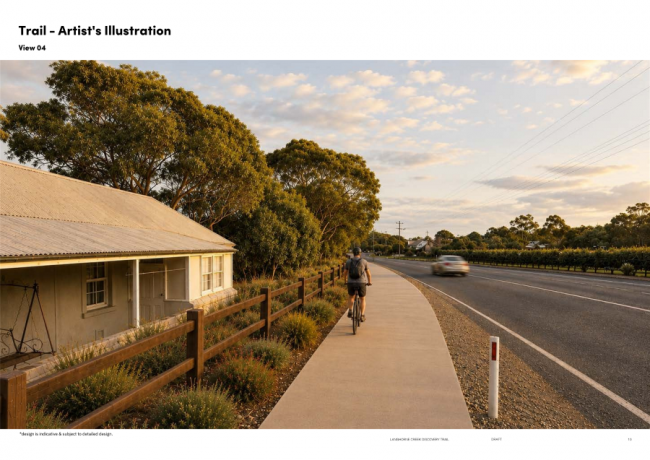
The Langhorne Creek Discovery Trail, being built with a $7.06 million grant from the Australian Government regional Precincts and Partnerships Program (rPPP), is a 2.8-kilometre walking and cycling trail between Bremerton and Bleasdale.
The Discovery Trail will create a new way to experience one of South Australia's most distinctive wine regions. Winding through the heart of Langhorne Creek, the trail will connect wineries, heritage, community spaces and natural landscapes, revealing the stories, character and experiences that make the region unique.
Artist designs for the Discovery Trail were shared with the community at an In-Region Reveal held at Langhorne Creek on Sunday 16 August. An A5 overview of the project was made available at the community event.
It is an ambitious investment in Langhorne Creek's future, designed to enhance its appeal as a visitor destination, attract new opportunities for business and tourism, and create a lasting legacy for generations to come.
The Discovery Trail is a community-led project, being driven by a Project Partnership Group, made up of Langhorne Creek Grape and Wine, the Langhorne Creek Hub, the Ngarrindjeri Aboriginal Corporation, and Alexandrina Council, alongside Fleurieu Peninsula-based construction firm, 35 South Building Co, which is delivering the design and construction.
Trail Features
Along the route, a series of new and renewed spaces are being developed, each reflecting what makes the region unique. Key features along the trail will include:
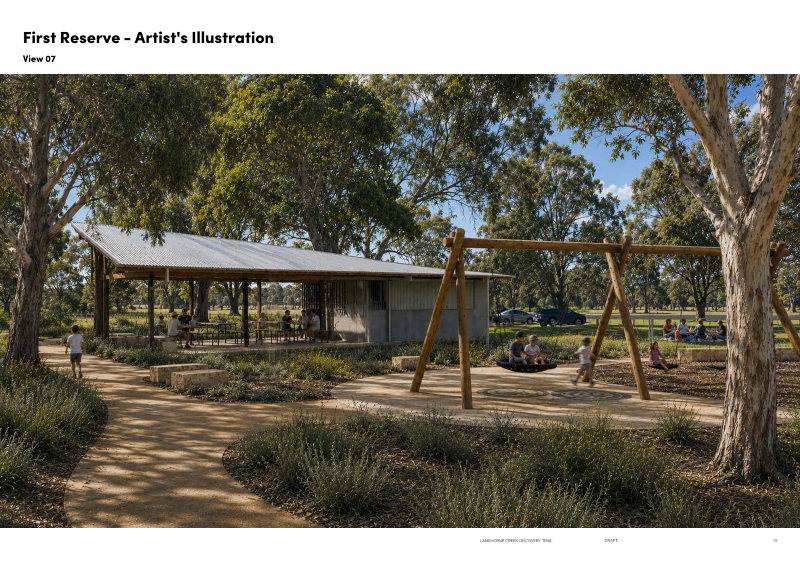
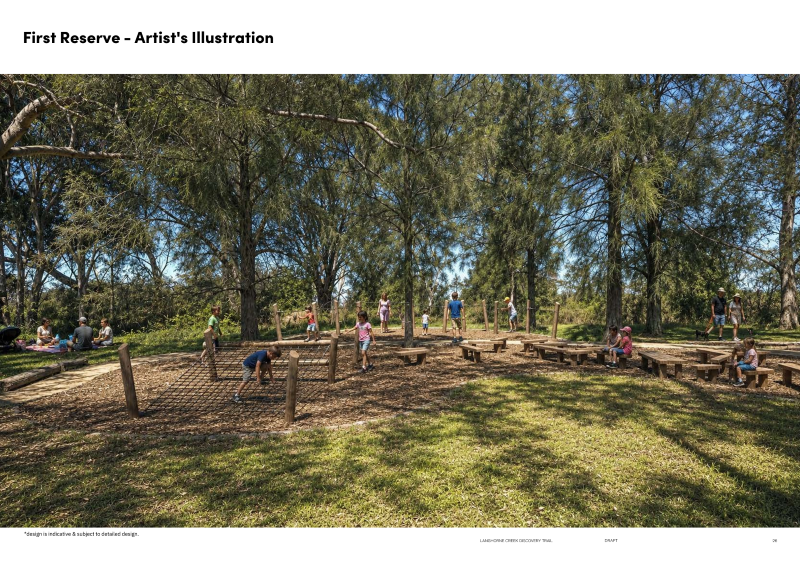
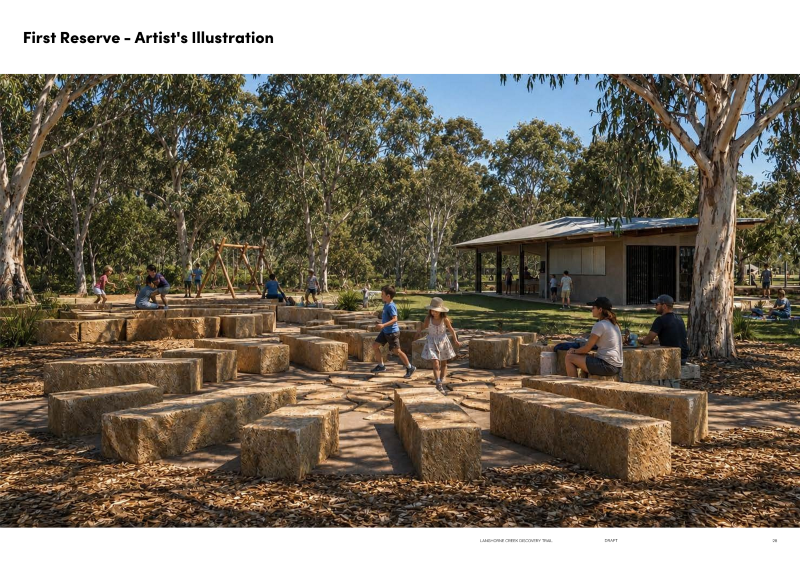
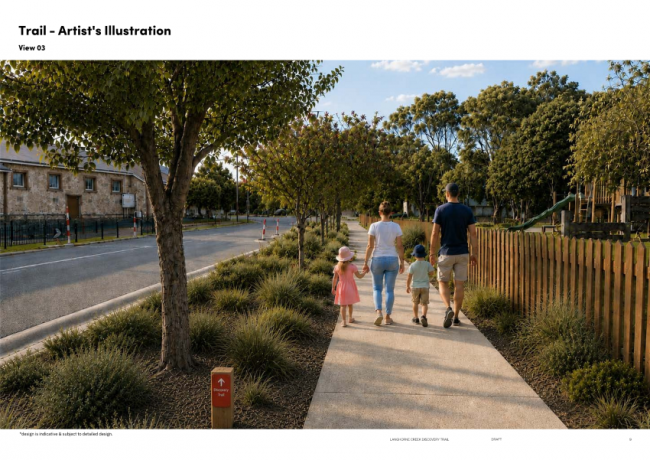
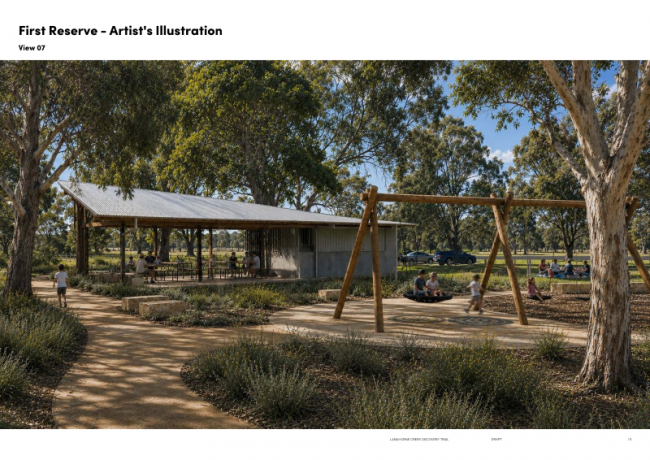
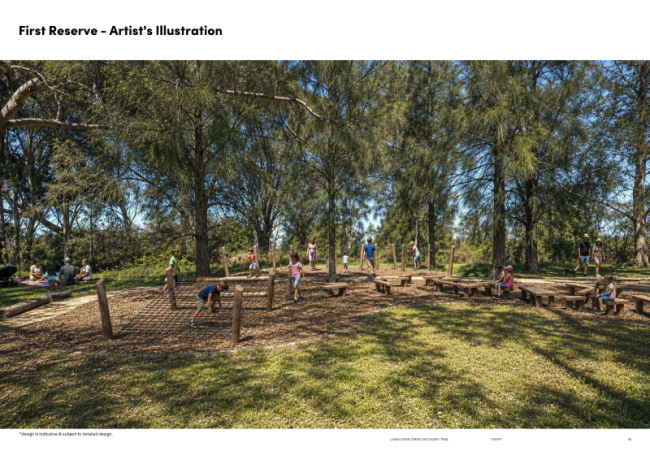
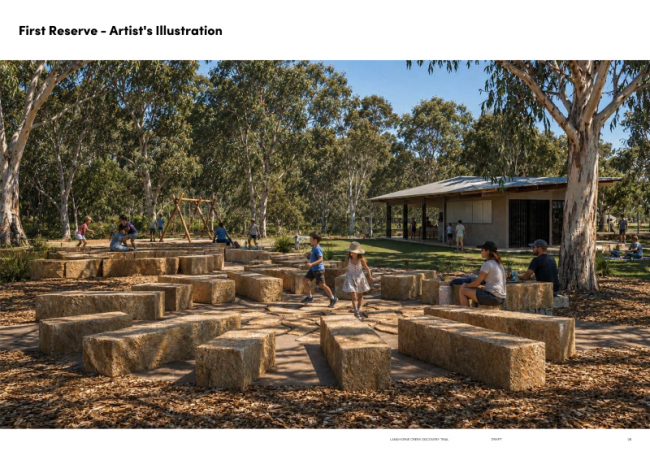
- At First Reserve, a new nature-based playground will be delivered. This will include contemporary play equipment, seasonal water elements and First Nations storytelling, along with new toilets, BBQ facilities and accessible play elements. The playground is intended to be a destination in its own right: something families and visitors will seek out and come to experience, not just pass through.
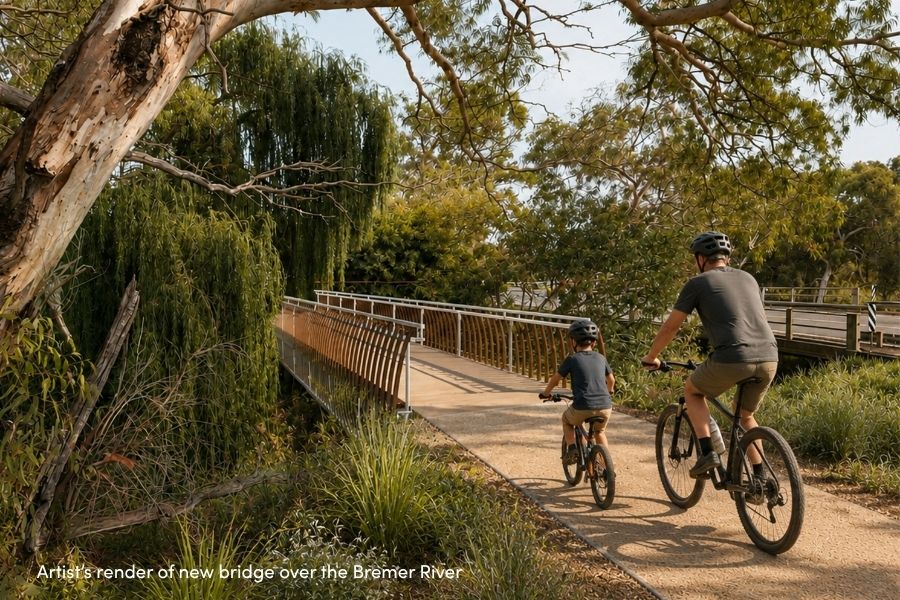
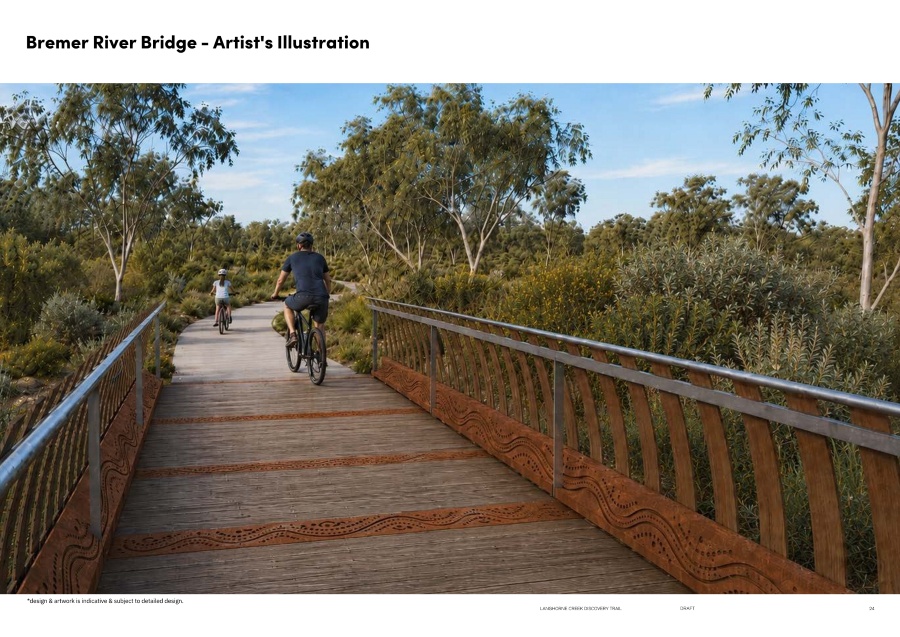
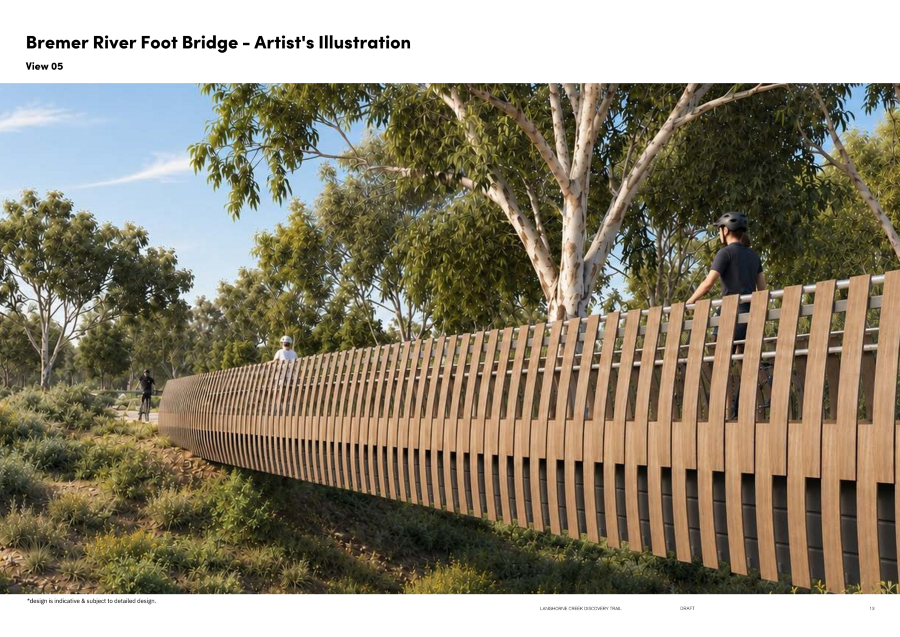
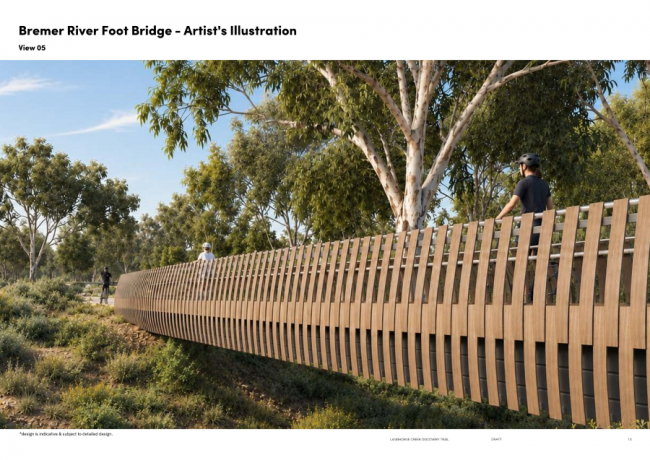
- Adjacent to this, a new pedestrian bridge across the Bremer River will provide an important connection, while also acting as a strong design feature that reflects the character of the region, with railing referencing wine barrel staves.
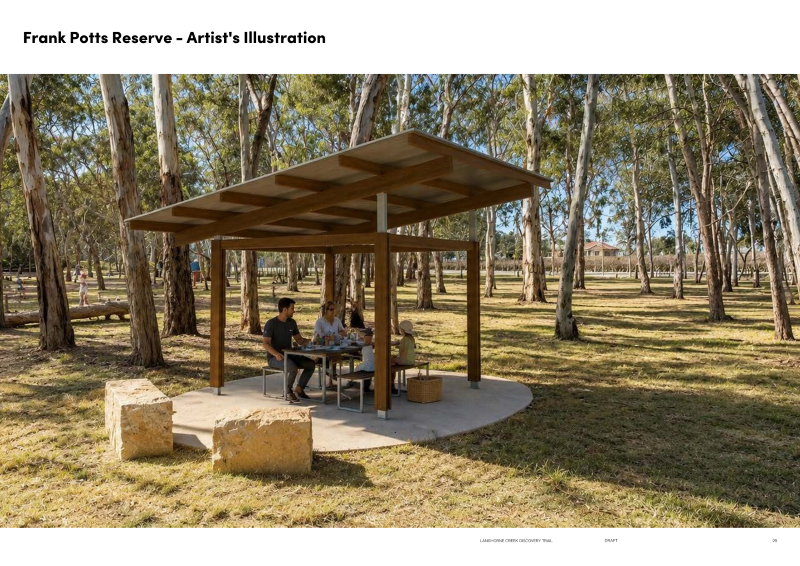
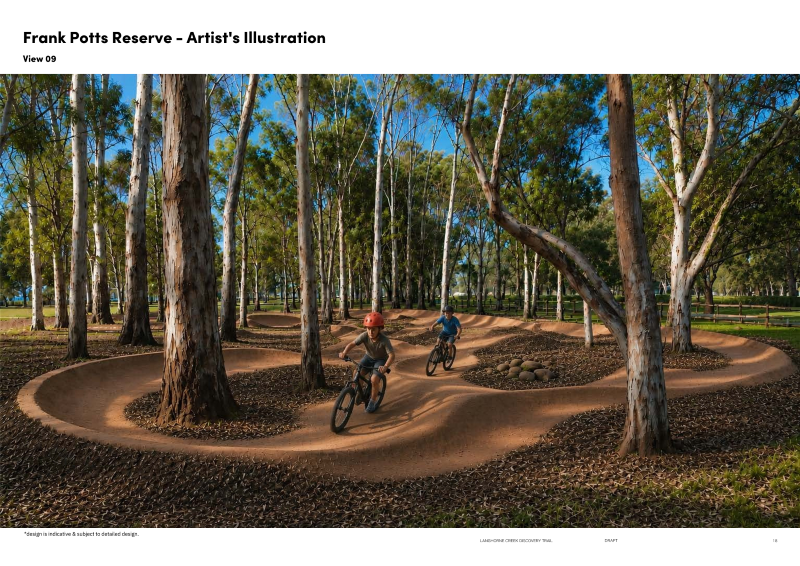
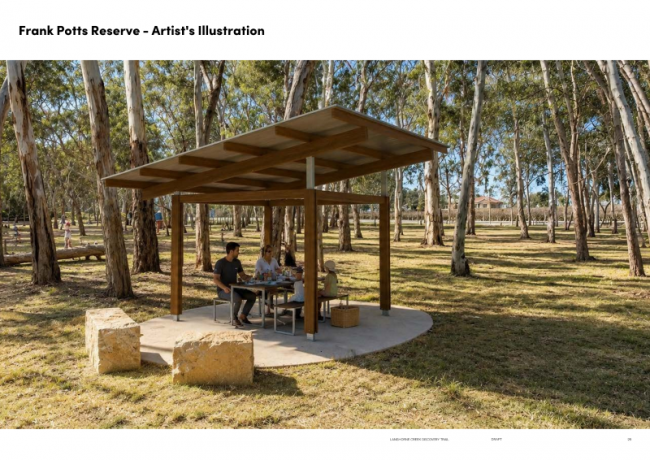
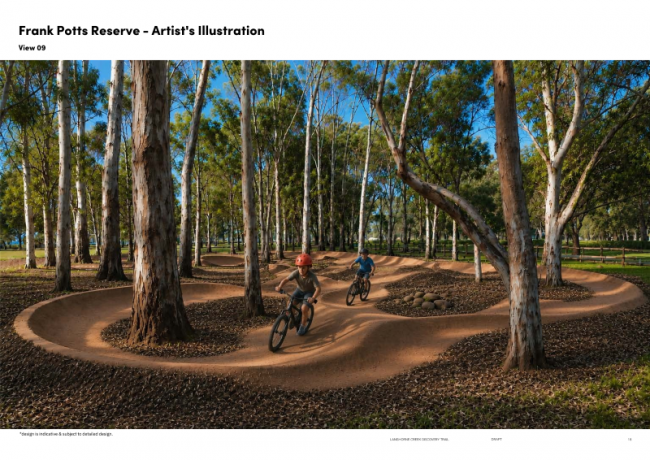
- At Frank Potts Reserve, two new shelters and picnic settings will be installed, along with a bicycle pump track outside the current camping area designed to sit within the existing treescape. These improvements will enhance the space for campers and the community.
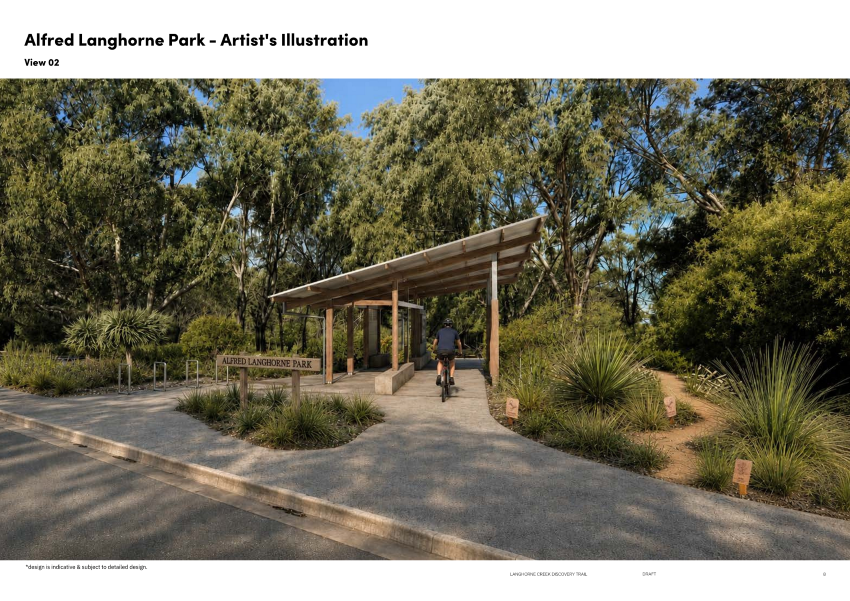
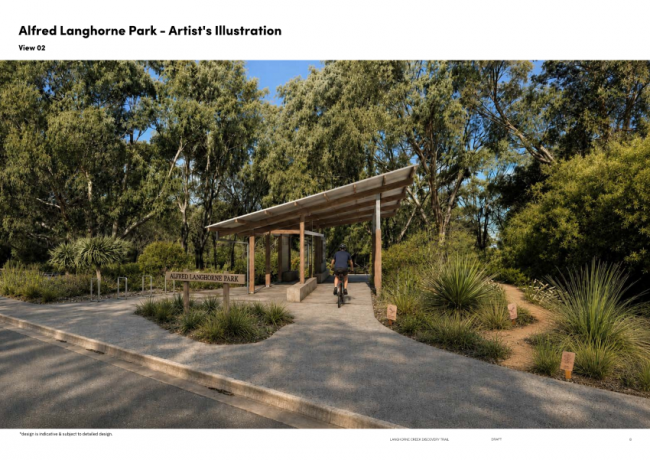
- At Alfred Langhorne Park, a new shelter will support storytelling and community information, including retaining the current artwork, helping to bring more life and activity into the space.
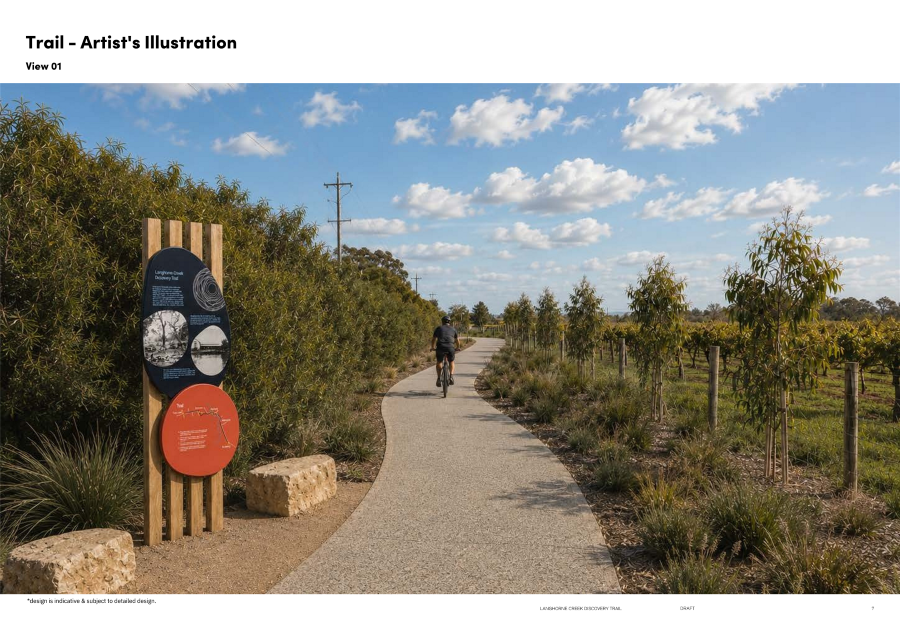
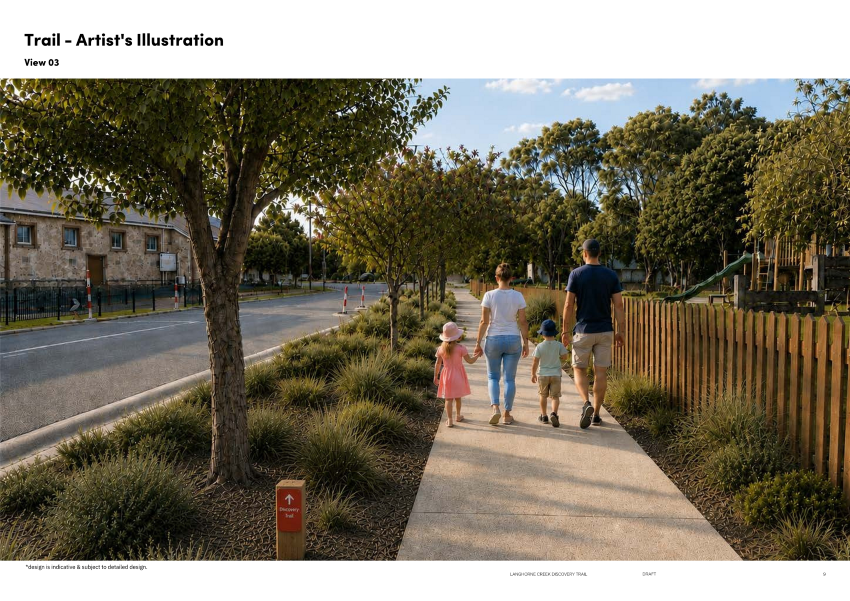
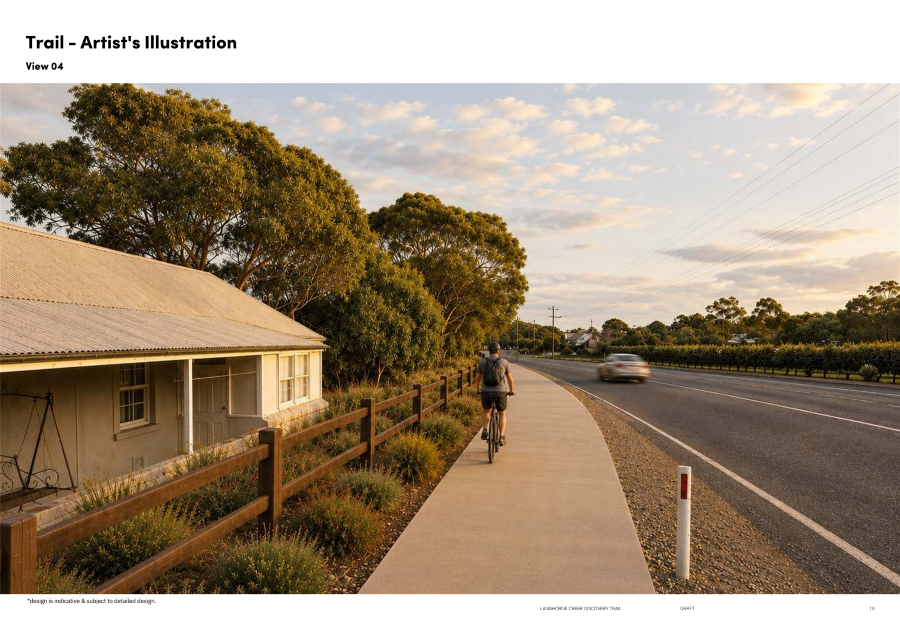
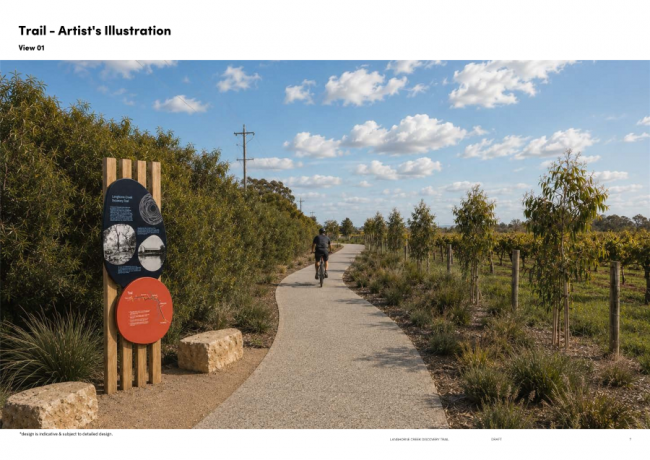
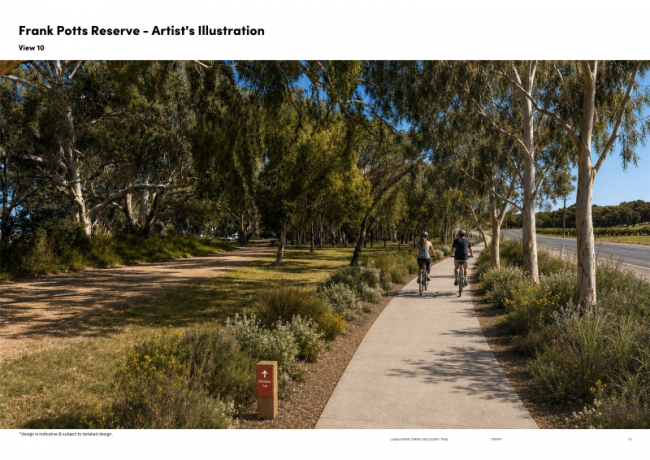
Across the full length of the Discovery Trail will be public artworks, seating and gathering points, with a strong emphasis on natural materials such as stone and timber. Significant landscaping will also take place with many hundreds of plantings, including mature trees and smaller natives, going in as part of the project.
Wayfinding and interpretive signage will help people better understand and experience the region, while also encouraging visitors to move beyond the trail itself, connecting them with local places and experiences across Langhorne Creek and the surrounding area.
Telling Local Stories
Storytelling is central to the project. Langhorne Creek has many layers: wine and produce, its unique water systems and flood history, rich local stories, and deep First Nations heritage.
Through the work of the Project Partnership Group – Langhorne Creek Grape and Wine, the Langhorne Creek Hub, the Ngarrindjeri Aboriginal Corporation and Council – these stories are being woven through the Discovery Trail, ensuring the outcome reflects and reinforces the identity of this special place.
Benefits for the Region
Taken together, the Discovery Trail is intended to:
- create new, high-quality public spaces for the community
- attract visitors and give them more reasons to stay and explore
- attract new investment to the region
- support local businesses by dispersing visitation across the region, and offering opportunities for activation and diversification
- express Langhorne Creek’s identity and shared sense of place
Trail Activation
While design progresses, the community-based Project Partnership Group is working closely with Council’s Economic Development team to kick off trail activation planning, supporting local operators to diversify, innovate and make the most of the increased visitor activity the Discovery Trail will create.
The Tourism Collective has been engaged by Council to assist with the delivery of a Tourism Development Plan, which the PPG will then take forward. The Tourism Collective is well placed to help elevate the Discovery Trail in the context of the state’s broader tourism landscape, as it is also working with the South Australian Tourism Commission to develop Destination Management Plans for regions across South Australia.
Project timeline
- August 2025: Alexandrina Council secures a $7.06 million grant from the Australian Government regional Precincts and Partnerships Program (rPPP).
- 20 February 2026: The tender process for full design and construction of the Discovery Trail closes, attracting many excellent submissions.
- 27 March 2026: 35 South Building Co is appointed as the project’s design and construction firm.
- 16 August 2026: In-Region Reveal - Discovery Trail designs shown to the community
- September 2026: Construction to begin.
- 31 March 2027: Construction expected to be complete.
Image Gallery of Artist Renders
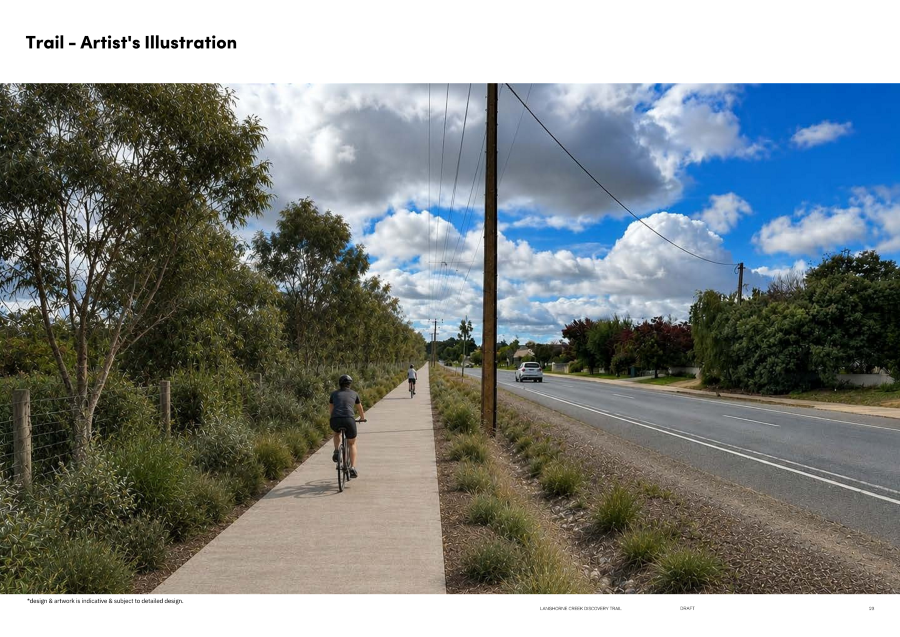
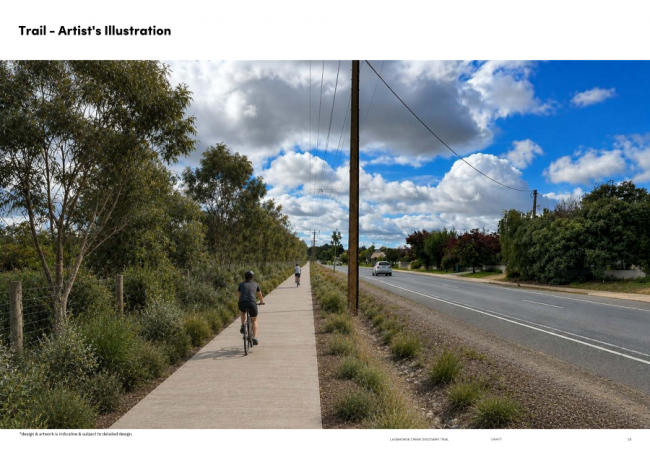
This image gallery includes the artist renders for the Discovery Trail. To find out more view the In-Region Reveal booklet.



More About the Project
The objective of the Langhorne Creek Discovery Trail (LCDT) is to create a multi-purpose trail that provides interesting, accessible and safe ways to enable tourists and locals to visit wineries, attractions and parks by both foot and on bikes.
The LCDT has been under consideration for several years by the community and industry representatives. Since late 2020, Alexandrina Council has been working closely with the Langhorne Creek Grape and Wine Association (LCGWA) and a key group of stakeholders to progress this project.
The 2.8km discovery trail will be Langhorne Creek’s hero attraction, connecting the region and unlocking opportunities. By bringing increased visitation, and dispersing tourists around the region, the project will support events, environmentally sensitive tourism, and immersive experiences with intergenerational and innovative producers.
The trail will support investment in accommodation in the region that reflects and enhances the region’s uniquely intimate environment, enabling personalised journeys that resonate with each visitor.
The trail will also act as a catalyst for new investment in recreation and experiences.
Langhorne Creek’s producers punch above their weight in their importance to the state’s economy; the LCDT will unlock this economic potential for the benefit of the whole region.
Background
Langhorne Creek is located approximately 55km southeast of Adelaide in the Alexandrina Council region. It has around 450 permanent residents while Alexandrina Council has 35,629 residents (ABS, 2025). Home to the traditional Ngarrindjeri people, the area is a thriving agricultural community of established families, progressive businesses and new generation artisans who create highly rewarded wines, grow quality fruit, and nurture prized livestock.
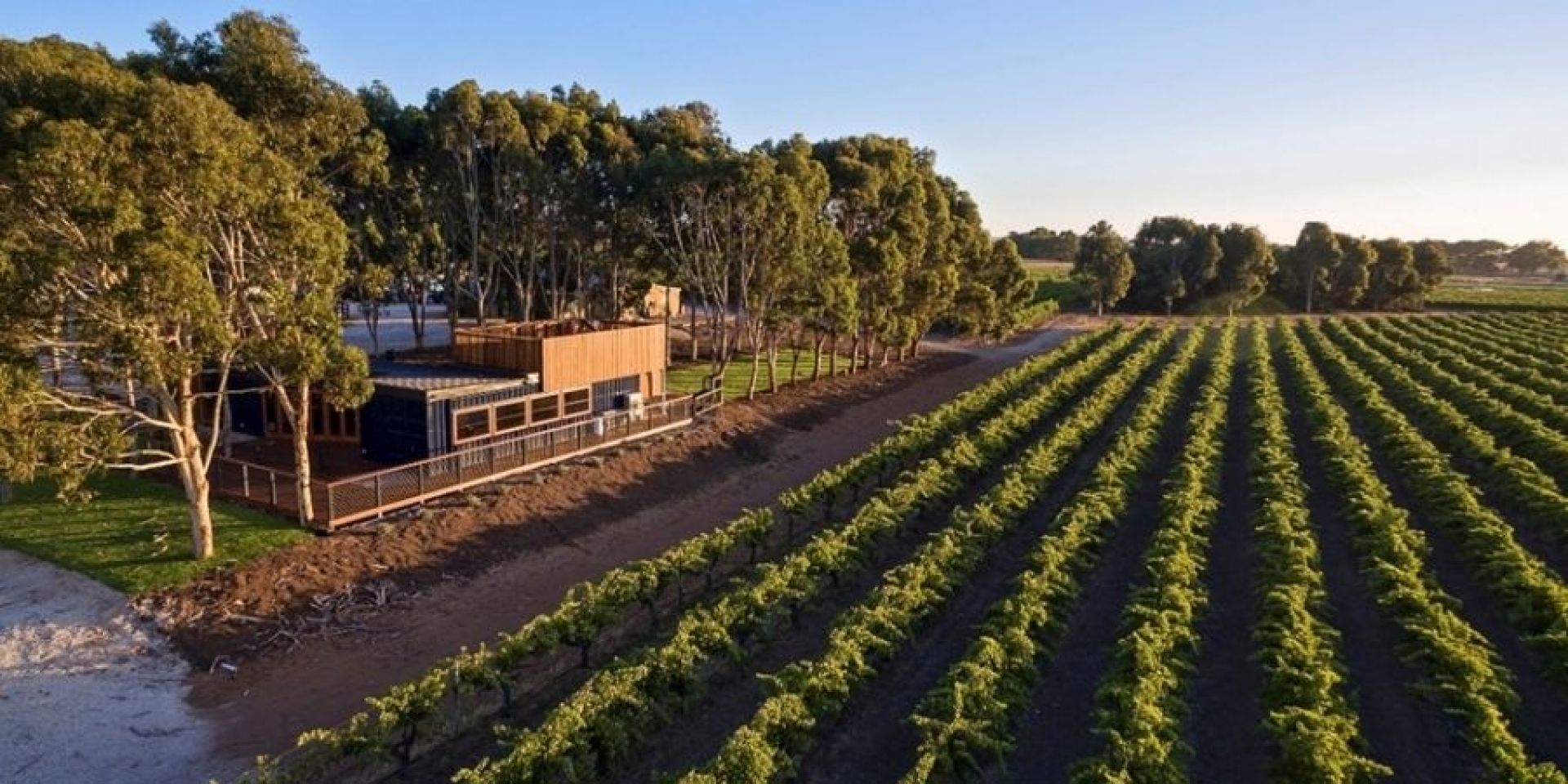
The name Langhorne Creek is instantly recognisable as one of Australia’s great wine brands, yet the region remains underexplored as a tourist destination. Langhorne Creek has much to offer: proximity to Adelaide, nine notable cellar doors and many more vineyards, fascinating history and geography, and a charming town centre.
Langhorne Creek’s notable winemaking methods, which take advantage of the annual flooding cycle, are unique in the world, and the region has the oldest Cabernet Sauvignon vines in the Southern Hemisphere.
All of this is packed into a pocket-sized region, ideal for traversing on foot or by bicycle, and offering an intimate and immersive experience.
Plans and Community Connection
In 2024, a comprehensive formal engagement process was completed for the Trail.
Feedback from this six-month campaign and two earlier Village Conversations was incorporated into concept design, then secondary concept design and masterplan.
Throughout design and delivery, community perspectives continue to be represented through the Project Partnership Group, which is playing a key role in ensuring the project remains closely connected to the community throughout design, construction, and activation.
Regional Precincts and Partnerships Grant
The Langhorne Creek Discovery Trail Project is funded by the Australian Government regional Precincts and Partnerships Program (rPPP).
The rPPP seeks to support transformative investment in regional, rural and remote Australia based on the principles of unifying regional places, growing economies and serving communities. Unlike traditional grant programs, the rPPP focuses on a partnership approach, bringing together governments and communities to deliver regional precincts that are tailored to local needs and have a shared vision for how that precinct connects to the region.
Other Documents
Langhorne Creek Discovery Trail - Business Case 2024
Langhorne Creek Discovery Trail - Masterplan