
Swamps of the Fleurieu Peninsula
The Swamps of the Fleurieu Peninsula are a nationally significant and unique wetland ecological community found in the high-rainfall areas of the southern Fleurieu Peninsula, South Australia. Approximately 764 swamps are located across multiple catchments of the Southern Mount Lofty Ranges, on the traditional lands of the Kaurna, Ngarrindjeri, and Peramangk Peoples.
Learn more about Aboriginal knowledge and values in these swamps.
National and State Protection
These swamps are protected under national and state legislation and are listed as a Critically Endangered Ecological Community under the Environment Protection and Biodiversity Conservation Act 1999 (EPBC Act).
Read more about their national protection.

Image: View of the Mount Compass Wetlands off Sam Court, Mount Compass.
Why are the swamps significant?
The Swamps of the Fleurieu Peninsula are the type of wetland recognised under the International Convention on Wetlands (Ramsar Convention). They occur on waterlogged soils fed by groundwater and rainfall, and can be permanent or seasonal, freshwater or brackish. Find out more in the Draft National Recovery Plan on the Swamps of the Fleurieu Peninsula
The swamps support rich and often unique plant communities, store significant carbon, help maintain water quality, reduce flooding, and provide water supplies for people, agriculture and the environment. They also provide critical habitat for threatened species, including the Southern Emu-wren of the Mount Lofty Ranges.
Why Are The Swamps Threatened?
The Fleurieu swamps have declined dramatically due to drainage and hydrological change, water extraction, land clearing, weeds, pest animals, grazing and climate change.
Once covering more than 2,000 hectares, less than 20 per cent remained by the early 1990s, and today most swamps are smaller than 10 hectares. Find out more in the Draft National Recovery Plan.
How Can You Help?
Around 94 per cent of Fleurieu swamps are on private land, making landholder involvement essential. Fewer than four per cent of the Peninsula’s original swamps remain, including those in the Mount Compass area.
Private landholders can play a key role by protecting existing swamps, improving management, and working with recovery partners. The Draft National Recovery Plan contains important information on recovery actions for private landowners.
Dedicated recovery partners with the Fleurieu area include:
- Traditional Owners
- Australian Government agencies
- South Australian Government agencies
- South Australian regional NRM organisations, such as the Hills and Fleurieu Landscape Board SA
- Local Government
- Conservation Council SA
- Civil society groups, such as the Nature Foundation, Fleurieu Swamp Restoration Network, Friends of Stipiturus and Hesperilla conservation parks, and the Country Fire Service
- Schools located near swamps, such as Mount Compass Area School
- Ecological scientists, consultants and other experts with experience and interest in the Swamps of the Fleurieu Peninsula ecological community
- Organisations and contractors operating in Conservation Parks and on private land.
Plan your visit
If you would like to learn more about the Swamps of the Fleurieu Peninsula, we recommend you visit two wetlands at Mount Compass.
Mount Compass School Swamp Boardwalk
The Mount Compass School Swamp is a freshwater swamp dominated by dense shrubby vegetation. The 500m boardwalk provides safe, easy access to the swamp, meandering through the shrub vegetation, over both wet and dry areas.
The boardwalk is maintained by the Mount Compass Area School, with support from Alexandrina Council.
For further information and to view a bird list for the Mount Compass School Swamp, visit the Birds SA website.
Mount Compass Wetlands
The Mount Compass Wetlands features a 730-metre-long boardwalk over a swamp on the outskirts of Mount Compass. This small but important wetland contains many rare, vulnerable and endangered plants. Over 100 plants have been identified in the swamp. The wetlands can be viewed from a wooden rotunda, which also contains useful information on the unique plants and animals.
More information is available on the Mount Compass Wetlands page.
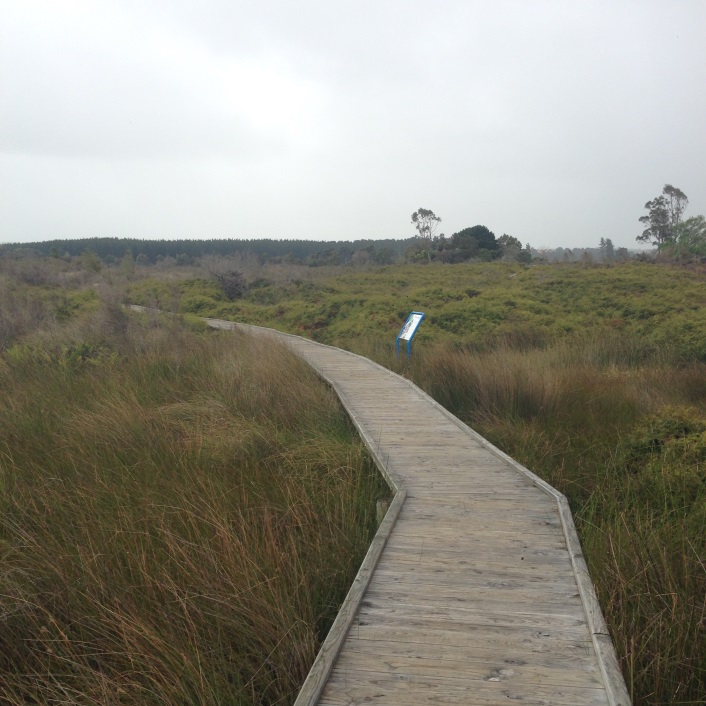
Image: Part of the 730m boardwalk over the Mount Compass Wetlands.