

Invasive species, such as rabbits, foxes but also weeds, like gazanias, pose a threat to our native vegetation. Alexandrina’s last remnants of native vegetation are contained in fragmented patches on both private and public land, and along our roadsides. Many of these parcels are small in area and/or linear in shape, making them more vulnerable to threats such as weeds, pest animals, diseases, and disturbance (known as edge effects).
Council staff are undertaking regular weed control, rabbit, and fox control across our most protected nature reserves and roadsides, but we rely on our adjourning landholders to also control their land. Pest plants and animals can easily move between property boundaries and have a devastating effect on our native fauna. For example, the endangered hooded plover nests and chicks on the beaches are often predated on by foxes that have their dens on private properties near the beaches.
The Landscape South Australia Act 2019 makes it clear that private and public landowners are responsible for the management of declared pest plants and animals on their land. Hence, it is important that landowners are aware of their pests and weeds on their land and control them if we are to be successful in controlling our pests and weeds in Alexandrina. The Hills and Fleurieu Regional Pest Plant and Animal Strategy is our region’s overarching strategy in controlling pests and weeds.
This is why we combine forces with the Landscape Board and our neighbouring councils to work on our priority weed and pest species, and to provide workshops to the community, such as the rabbit workshops and bait programs, or weed identification workshops.
To learn more about your responsibly as a land manager, how to identify and control pest plants, pest animals and marine plants, or to find out about workshops and baiting programs, visit the Hills and Fleurieu Landscape SA website for detailed information.
Identifying and managing weeds also become easier through the new Weed Identification App. For more information and to download the app, visit the WeedScan website here.


What are gazanias?
Gazanias are escaped garden plants, introduced to Australia from South Africa. In South Australia, gazanias are an invasive environmental weed on roadsides and coastal dunes and present a significant threat to the health of our natural ecosystems by outcompeting our native plants. Gazania is a declared weed under the Landscape South Australia Act 2019. The sale of gazania or contaminated goods and its movement on a public road are prohibited. For more information on gazania, refer to the Hills and Fleurieu Landscape Board gazania factsheet.
Why remove gazanias?
It is the responsibility of the landowner to control gazanias on their property. Established plants reproduce by seed, which can disperse 1km or more from the source, and through Rhizomes, produce a dense carpeting groundcover. In coastal environments, there is potential for gazanias to form a continuous ground cover, which chokes out native vegetation.
Council staff and volunteers are engaged in the ongoing removal of gazanias from reserves in Goolwa and Middleton, particularly in the dune system along the coastal strip. The work is vital to preserve the biodiversity of bushland areas but can only be successful if new plants do not re-establish where older plants have been removed. We are appealing for the help of local residents by asking them to remove plants from private gardens and road verges, so that they do not contribute to the re-establishment of gazanias in bushland reserves.
Benefits of backyards for biodiversity
As urban areas have expanded, natural bushland has been fragmented and largely confined to small conservation reserves. In some areas such as Goolwa, Council and the local community are working hard to preserve the last remaining areas of native vegetation as urban biodiversity reserves (such as the Goolwa sand dune system). However, there is no reason why backyards can't be rich in native plant and animal communities.
You can help improve your local environment by choosing to plant indigenous plants in your garden. Backyards for biodiversity help to conserve native plant and animal species and create links between isolated bushland reserves. They also add colour and life to your backyard by attracting native wildlife such as birds. On top of that, it makes practical sense to choose indigenous plant species because they are adapted to the conditions, and therefore require less maintenance, less water, less fertiliser, less pesticide - basically less fuss! There are lots of resources available to show you how others have gone about creating a backyard for biodiversity.
What can I plant?
Landscape South Australia has produced a useful Coastal gardens planting guide that provides simple yet inspiring garden advice for people living in the coastal areas. Water-wise local native plants are attractive replacements for introduced plants that are harmful to our local coastal landscapes. Alexandrina Council also produced a Township Verge Planting Guide that can be downloaded here.
Where can I buy local native plants?
Community nurseries are great places to find out about suitable plants and planting conditions. The following community nurseries are in the Alexandrina area – please check out their contacts first before you get in contact with them as contacts may have changed:
Alexandrina Community Nursery | Clayton Bay Community Nursery | Hindmarsh Island Landcare Group Community Nursery |
About our campaign partners
Since 2018, Alexandrina Council delivered several campaigns encouraging residents to remove gazanias from their gardens and roadside verges. The Gazania free garden swap events are a collaboration between Alexandrina Council, Landscape Boards, neighbouring local councils, community, and local community nurseries. The campaigns are initiated through Alexandrina's Environmental Action Plan 2030.
Further information
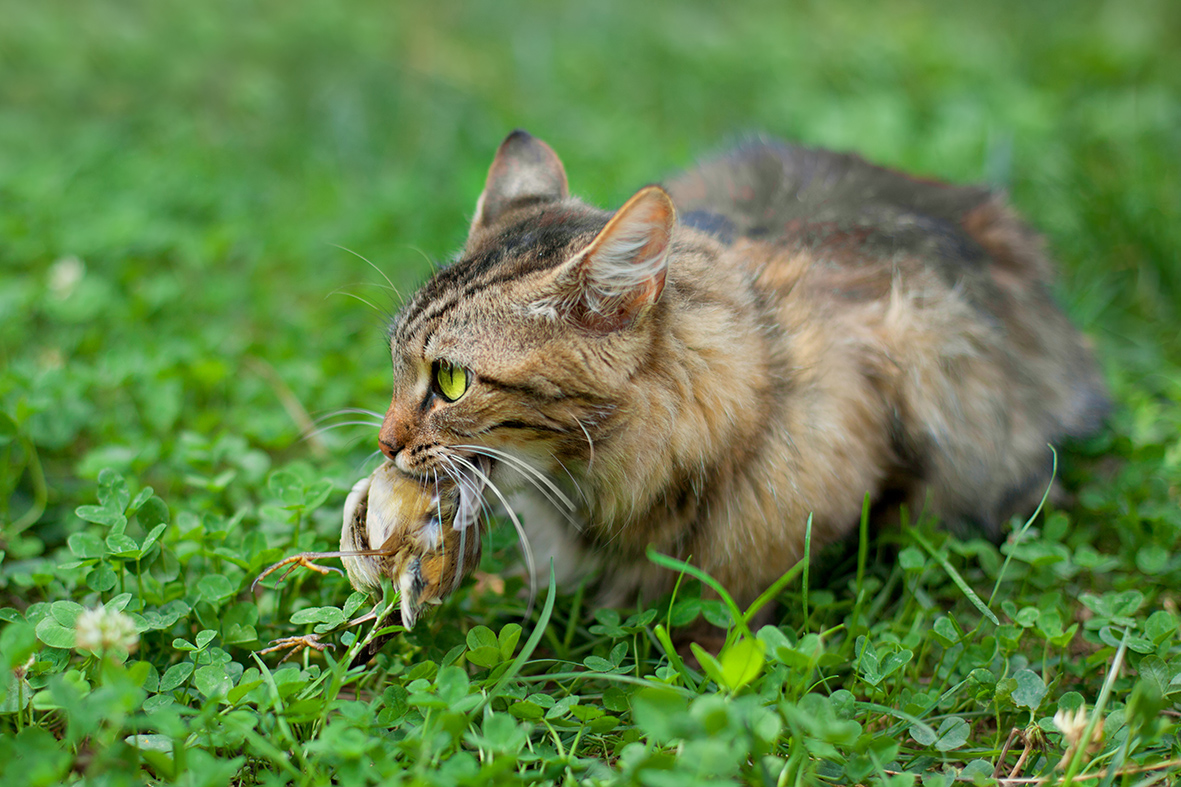
Alexandrina Council coordinates a program which aims to reduce nuisance feral cat colonies throughout the area. A large population of feral cats can very quickly impact on the breeding success of native species. Council’s cat management practices have been designed to protect the welfare of native species as well as of owned and domestic cats.
In August 2023 Council adopted the Cats by-law. The objectives of the Cats by-law are to control and manage cats in the Council’s area:
- to promote responsible cat ownership;
- to reduce the incidence of public and environmental nuisance caused by cats;
- to protect the comfort and safety of members of the public; and
- for the good rule and government of the Council’s area.
The By-Law includes limits on cat numbers and effective confinement of cats. For more information, visit the By-Laws section or the animal management section on our webpage.
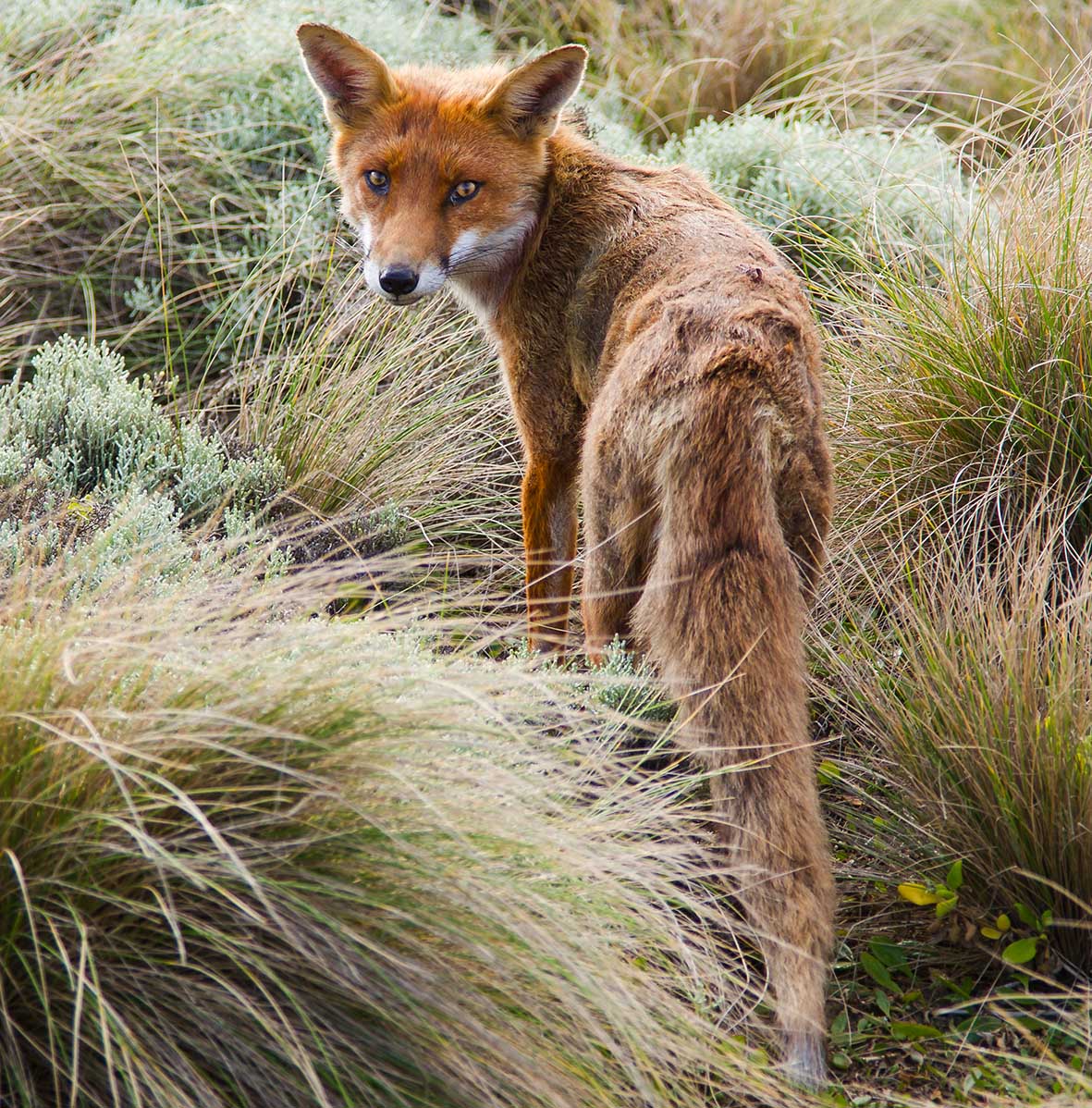
Foxes were first introduced into Australia in the 1870s for recreational hunting purposes. They have since spread to become one of our major pests and are a major problem for landholders.
The best approach to managing urban and urban fringe fox problems is to eliminate or prevent access to things that attract foxes to the area, such as easy sources of food (dog and cat biscuits, meat bones, leftovers) and daytime shelter.
Council discourages any interaction with foxes as they can carry hydatids (tapeworm) which can infect humans. They can also carry mange and other diseases that can be transmitted to your pets.
Pest animal control is the responsibility of the landowner and Council controls foxes focussing on its most environmental sensitive reserves.
What can you do?
The fox is a declared pest animal under the Landscape South Australia Act 2019 and is the responsibility of property owners to control them. It is also illegal to keep foxes as pets.
Please do not deliberately feed any foxes.
If you would like more information about fox management on your property, visit the Hills and Fleurieu Landscape South Australia and download the fact sheet.
Rabbits can have a devastating impact on our natural environment. They eat native plants and can destroy root systems when burrowing. They also compete with native animals for shelter and food, and they can cause erosion by digging extensive warrens.
Pet rabbits can also become a threat if they escape from domestic back yards. Please ensure pet rabbits are kept in a safe enclosure and do not dump unwanted pets in our local reserves.
Pest animal control is the responsibility of the landowner and Council controls rabbits focussing on its most environmental sensitive reserves.
What can you do?
Using a range of methods and coordinating with your neighbours to control rabbits over the summer season produces great results and restricts rapid recovery of the rabbit population in autumn.
Want to actively control feral rabbits on your property? The Hills and Fleurieu Landscape South Australia’s bait distribution days offer rabbit bait at discount prices and will help you undertake a coordinated baiting program at the optimal time, when conditions are dry, and feed is scarce.
The Landscape Board provides the following advice to manage feral rabbits:
- Exclude rabbits from revegetation areas and gardens using suitable guards and fencing
- Bait with pindone-treated carrots in summer. These can be sourced from us through our office or at one of our distribution days in February and March.
- Bait with pindone-treated oats – these can be purchased from some hardware stores and ag stores
- Bait with RHDV K5 treated carrots sourced from one of our distribution days in February and March.
- Destroy or collapse warrens and remove shelter, clean up piles of green waste, prunings and branches, and deal with those piles of pallets.
- Talk to your neighbours and get them involved to achieve wider rabbit control in your area.
Controlling rabbits in an urban setting can be difficult as the range of options available is limited. The aim should be to remove the rabbits from the environment, and also to modify their environment so that it is less attractive to rabbits in the future.
The first step is to identify the location of any warrens or above ground cover such as plant beds or woodheaps etc. that provide rabbits some refuge. Rabbits are territorial and generally don’t travel more than 200 metres from these sites, with most of their feeding done within 25 to 50 metres. Look for signs of where rabbits have been active, such as burrows, fresh scratches in the soil, scattered or piled dung and damage to vegetation.
Locate the refuge being used and make an estimate of the total area that the rabbits move within. This area is where your control program will need to concentrate. Rabbits do not respect property boundaries so it may be necessary to take joint action with your neighbours.
For more information on how to manage rabbits on rural or urban properties, visit the Hills and Fleurieu Landscape South Australia.
